


.png)

Top Trends in Cat Collar Designs for 2026
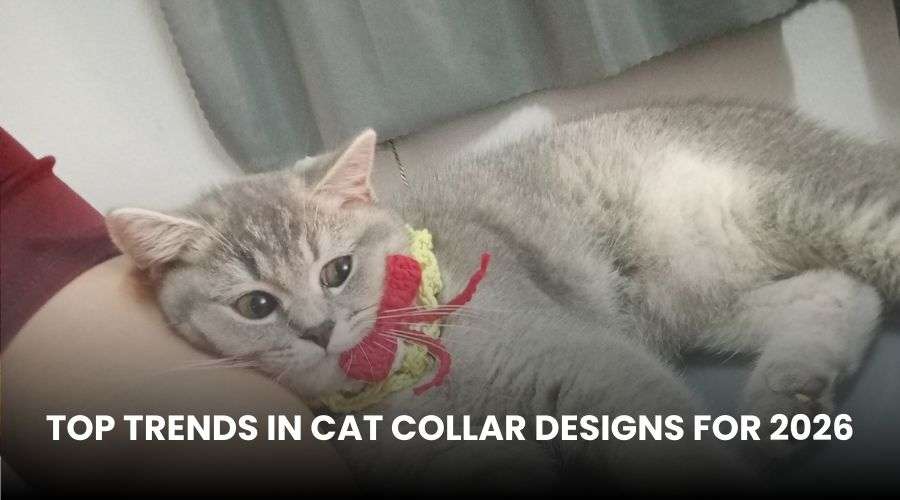
Cat collars are no longer a dusty add-on for a pet accessories collection. In 2026, they have become a safety decision and a style choice for pet owners. When a customer buys a collar that works, they feel relief. When it fails, they feel guilt, anger, and urgency.
So your job as a pet store or retailer isn’t to “carry collars.” Your job is to offer collar collections that offer a complete solution: safer cats, calmer owners, fewer returns, better reviews, stronger repeat traffic. In this blog, we discuss four collar types that are in high demand right now and will continue to be in high demand throughout 2026. We will give the complete rundown on how brick-and-mortar and online pet stores can turn that demand into reliable revenue.
Nylon Reflective Breakaway Cat Collars: The Proven Workhorse That Quietly Wins
This is the collar customers trust when they don’t want to think too much and keep their buying decisions simple. It’s familiar and tested by the crowd. It has a simple, basic design, and that makes it a high-volume item in your pet accessories or collar lineup.
Reflective nylon collar with a breakaway buckle solves two problems for cat owners at once: “Will I see my cat?” and “Will my cat get stuck?” Customers don’t always speak those fears out loud, but they feel them in their chest. Your merchandising should connect with the customer’s emotion for their pets.
As a pet store owner, place this product where first-time cat owners naturally browse, not where seasoned pet enthusiasts check out the shelves. A perfect placement is near litter solutions, basic bowls, carriers, and starter grooming. If you sell on an online store, this should be your default recommended option in “new cat checklist” bundles and safety collections.
Personalized Nylon Embroidered Breakaway Collars
Personalized products can make a pet store stand out from the rest. An embroidered name and contact number help owners imagine a clean, fast reunion if their cat slips out. That mental picture is powerful. It converts.
This collar type appeals greatly to urban and suburban professionals, and to families who treat pets like family members, not animals on the property. They want practical elegance. Embroidered cat collars remove the jingle and the clank of tags, which matters more than retailers sometimes assume. The customer isn’t just avoiding sound. They’re avoiding the annoyance of noise.
From a store selling perspective, embroidered collars create a premium tier without needing luxury materials. Your margin will come from customization value, not from manufacturing cost alone. That’s good business, as long as you manage expectations. Clearly communicate turnaround times, character limits, and thread color visibility, and the fact that embroidery readability depends on collar width and contrast.
For an embroidered collar product, the personalized embroidery should be very visible. Show finished samples with readable text, not just a swatch book. Online, give customers confidence with a preview-style personalization field and photos that demonstrate legibility. If your platform allows it, include a simple line like “Best contrast: light thread on dark collar” to prevent customer regret.
Buyers will sometimes worry that a personalized collar is “too much” for a cat. Your job is to normalize it as practical care.
Breakaway Glow-in-the-Dark Collars: Night Visibility That Sells in One Glance
Glow-in-the-dark collars win on an advantage that most product categories don’t have: amazing visual appeal. Customers don’t have to imagine the benefit. It is plain enough to see.
This cat collar has a high selling potential in suburban and semi-rural markets, especially where cats roam at dusk, and owners worry about their safety from risks like road traffic, coyotes, or getting lost. The main selling point is protection. Owners want to spot their cat fast, and these illuminated collars make that possible.
For pet stores, displaying these unique cat collars is easy since they can grab attention with only a small, low-light demo. A simple shaded display area or a “charged” sample near a window can do the job. For online sales, a video matters. A short clip that shows the glow effect after exposure to light reduces skepticism and increases add-to-cart.
Material comfort is another aspect that makes these collars appealing and a worthy addition to any pet accessories collection. Customers buying for everyday wear are quietly asking, “Will my cat tolerate this?” Softness and lightweight construction lower resistance and reduce returns. This is a great product to place near reflective breakaway collars, as it encourages potential customers who are shopping for reflective collars trade up to a better version.
Personalized Handmade / Custom Collars
Handmade collars are another type of collar that can massively boost sales of any pet store in 2026 because they satisfy two customer demands: uniqueness and care. People want their cat to feel special, and they want to show the world how much they love their pets.
For pet stores, custom and artisanal collars do three strategic things. They differentiate you from big-box sameness. Moreover, they make a wonderful gift item that connects to the gifting demand during holidays and “new pet” moments. And they are great for social media content. Customers post them. Friends ask where they came from. And you get free word-of-mouth marketing.
To win in 2026, choose handmade options that still fulfil safety standards. Reflective details and breakaway features should be non-negotiable. If you carry styles that prioritize aesthetics over safe release, you risk the kind of complaint that spreads fast and dents your reputation.
Modern tracking options, like engraving or AirTag holder designs, are add-ons that can lift this tier further. The customer isn’t only buying a collar. They’re buying peace of mind they can feel in their shoulders when the cat slips outside. That peace is worth money, and it’s worth marketing properly. Don’t tuck these into a corner. Place them where shoppers slow down and browse: near premium treats, boutique toys, and seasonal gift sets.
Online, treat this as a collection with strong photography, clear sizing, and a simple narrative. Highlight features like “Handmade patterns. Breakaway safety. Optional tracking.”
Conclusion
A high-performing collar collection usually has one reliable base product, one responsibility-driven upgrade, one visual “night” option, and one boutique tier that sparks gifting and sharing. That structure can cater to all customer segments in 2026. But you also need a reliable supplier that stocks a wide array of collar types and delivers them to you at an affordable price. Expander Sourcing is one such collar manufacturer that is a one-stop solution to collar procurement for pet stores.
Your store will be successful when the shelf tells a simple story: visible, safe, comfortable, and identifiable. Keep that story consistent across marketing materials, product pages, and staff recommendations.
Featured Articles
Cat collars are no longer a dusty add-on for a pet accessories collection. In 2026, they have become a safety decision and a style choice for pet owners. When a customer buys a collar that works, they feel relief. When it fails, they feel guilt, anger, and urgency. So your job as a pet store or retailer isn’t to “carry collars.” Your job is to offer collar collections that offer a complete solution: safer cats, calmer owners, fewer returns, better reviews, stronger repeat traffic. In this blog, we discuss four collar types that are in high demand right now and will continue to be in high demand throughout 2026. We will give the complete rundown on how brick-and-mortar and online pet stores can turn that demand into reliable revenue. Nylon Reflective Breakaway Cat Collars: The Proven Workhorse That Quietly Wins This is the collar customers trust when they don’t want to think too much and keep their buying decisions simple. It’s familiar and tested by the crowd. It has a simple, basic design, and that makes it a high-volume item in your pet accessories or collar lineup. Reflective nylon collar with a breakaway buckle solves two problems for cat owners at once: “Will I see my cat?” and “Will my cat get stuck?” Customers don’t always speak those fears out loud, but they feel them in their chest. Your merchandising should connect with the customer’s emotion for their pets. As a pet store owner, place this product where first-time cat owners naturally browse, not where seasoned pet enthusiasts check out the shelves. A perfect placement is near litter solutions, basic bowls, carriers, and starter grooming. If you sell on an online store, this should be your default recommended option in “new cat checklist” bundles and safety collections. Personalized Nylon Embroidered Breakaway Collars Personalized products can make a pet store stand out from the rest. An embroidered name and contact number help owners imagine a clean, fast reunion if their cat slips out. That mental picture is powerful. It converts. This collar type appeals greatly to urban and suburban professionals, and to families who treat pets like family members, not animals on the property. They want practical elegance. Embroidered cat collars remove the jingle and the clank of tags, which matters more than retailers sometimes assume. The customer isn’t just avoiding sound. They’re avoiding the annoyance of noise. From a store selling perspective, embroidered collars create a premium tier without needing luxury materials. Your margin will come from customization value, not from manufacturing cost alone. That’s good business, as long as you manage expectations. Clearly communicate turnaround times, character limits, and thread color visibility, and the fact that embroidery readability depends on collar width and contrast. For an embroidered collar product, the personalized embroidery should be very visible. Show finished samples with readable text, not just a swatch book. Online, give customers confidence with a preview-style personalization field and photos that demonstrate legibility. If your platform allows it, include a simple line like “Best contrast: light thread on dark collar” to prevent customer regret. Buyers will sometimes worry that a personalized collar is “too much” for a cat. Your job is to normalize it as practical care. Breakaway Glow-in-the-Dark Collars: Night Visibility That Sells in One Glance Glow-in-the-dark collars win on an advantage that most product categories don’t have: amazing visual appeal. Customers don’t have to imagine the benefit. It is plain enough to see. This cat collar has a high selling potential in suburban and semi-rural markets, especially where cats roam at dusk, and owners worry about their safety from risks like road traffic, coyotes, or getting lost. The main selling point is protection. Owners want to spot their cat fast, and these illuminated collars make that possible. For pet stores, displaying these unique cat collars is easy since they can grab attention with only a small, low-light demo. A simple shaded display area or a “charged” sample near a window can do the job. For online sales, a video matters. A short clip that shows the glow effect after exposure to light reduces skepticism and increases add-to-cart. Material comfort is another aspect that makes these collars appealing and a worthy addition to any pet accessories collection. Customers buying for everyday wear are quietly asking, “Will my cat tolerate this?” Softness and lightweight construction lower resistance and reduce returns. This is a great product to place near reflective breakaway collars, as it encourages potential customers who are shopping for reflective collars trade up to a better version. Personalized Handmade / Custom Collars Handmade collars are another type of collar that can massively boost sales of any pet store in 2026 because they satisfy two customer demands: uniqueness and care. People want their cat to feel special, and they want to show the world how much they love their pets. For pet stores, custom and artisanal collars do three strategic things. They differentiate you from big-box sameness. Moreover, they make a wonderful gift item that connects to the gifting demand during holidays and “new pet” moments. And they are great for social media content. Customers post them. Friends ask where they came from. And you get free word-of-mouth marketing. To win in 2026, choose handmade options that still fulfil safety standards. Reflective details and breakaway features should be non-negotiable. If you carry styles that prioritize aesthetics over safe release, you risk the kind of complaint that spreads fast and dents your reputation. Modern tracking options, like engraving or AirTag holder designs, are add-ons that can lift this tier further. The customer isn’t only buying a collar. They’re buying peace of mind they can feel in their shoulders when the cat slips outside. That peace is worth money, and it’s worth marketing properly. Don’t tuck these into a corner. Place them where shoppers slow down and browse: near premium treats, boutique toys, and seasonal gift sets. Online, treat this as a collection with strong photography, clear sizing, and a simple narrative. Highlight features like “Handmade patterns. Breakaway safety. Optional tracking.” Conclusion A high-performing collar collection usually has one reliable base product, one responsibility-driven upgrade, one visual “night” option, and one boutique tier that sparks gifting and sharing. That structure can cater to all customer segments in 2026. But you also need a reliable supplier that stocks a wide array of collar types and delivers them to you at an affordable price. Expander Sourcing is one such collar manufacturer that is a one-stop solution to collar procurement for pet stores. Your store will be successful when the shelf tells a simple story: visible, safe, comfortable, and identifiable. Keep that story consistent across marketing materials, product pages, and staff recommendations.
READ FULLFor dog leash sellers, nylon and leather don’t just behave differently in a dog’s neck. They behave differently in balance sheets, your catalog logic, and your customer promises. Choose wrong, and you don’t just lose margin, but also you invite returns, complaints, and slow-selling stock. Choose right, and the product quietly does its job while your brand compounds trust. In this blog, we will do an in-depth comparison of both materials of dog leashes to see which is better for dog accessories sellers' reputation, because leashes are high-touch products. They get pulled, twisted, soaked, chewed, and judged. Every weakness eventually shows up in a review. Nylon vs Leather at a Glance Nylon has a uniform appearance and toughness. Synthetic fibers have predictable tensile strength, colorfast dyes, and are easy and quick to manufacture. It dominates volume channels because it behaves the same at scale. Leather is an organic material. Hide quality, tanning method, finish, stitching, all matter. When done right, leather communicates restraint and confidence. When done wrong, it exposes flaws mercilessly. Costing & Pricing Flexibility Nylon Nylon gives you more flexibility for retail pricing. Raw material costs are relatively stable, manufacturing is automated, and wastage is low. That stability translates into flexible pricing bands and easier MOQ negotiations. You can cater to wa ide audience with various entry-level price points without losing margin. Leather Leather is not that flexible, and the final product price varies a lot. Material costs fluctuate with hide availability and tanning standards. Skilled labor adds to the cost. Your wholesale price climbs, and so does the pressure to justify it at retail. But the positive part is that customers who buy leather leashes also expect to pay more, and they rarely compare leather directly with nylon on price alone. Durability, Wear & Return Risk Nylon Nylon resists water, shrugs off mud, and forgives neglect. It performs well under repeated stress, especially when webbing quality and stitching are controlled. Chewing remains its weak spot, but failure is usually visible before it becomes catastrophic. Leather Leather ages instead of degrading. That’s its promise and its risk. Properly tanned leather strengthens with use, developing patina rather than fray. Poor leather cracks, stretches, and smells. When leather fails, it feels like betrayal. Returns follow emotion, not logic. This is where supplier discipline matters more than material romance. Target Customer Segments & Market Positioning Nylon Nylon serves the broad middle. Urban dog owners. First-time buyers. Utility-focused shoppers who value function over story. It fits mass retail, online marketplaces, and subscription add-ons without explanation. Leather Leather speaks to intent. Boutique buyers. Lifestyle brands. Customers who see the leash as an extension of their own aesthetic. These buyers forgive the price. They don’t forgive shortcuts. Branding, Customization & Visual Appeal Nylon Nylon leashes make branding really easy. Colors in nylon leashes are bright and eye-catching. Patterns print cleanly on the surface, and the logos stay legible. Matching collars and harnesses are easy to standardize. For private labels, nylon leashes can be expanded from a single product to a large collection. Leather Leather has a more subtle appeal. Branding happens through embossing, hardware choice, edge paint, and stitching contrast. If you are selling online, leather needs better photography to sell its value. Both brands are well-known, but the style appeal is very different. Maintenance, Care & Customer Education Burden Nylon Nylon asks little. Wash it. Dry it, and that’s it. That simplicity lowers the need of educating the customer regarding use. Leather Leather demands more care. Conditioning, drying discipline, and storage should be aligned. Without education, customers blame the product for their neglect. Brands selling leather must decide whether they want to teach or absorb the cost of misunderstanding. Supply Chain Stability & Scalability Nylon Nylon wins on predictable supply. There is no shortage of suppliers. Manufacturing is easy, so you get consistent output and short lead times. Scaling up rarely changes quality if specifications are fixed. Leather Leather scales more slowly. Hide quality varies by batch. Tanning standards differ by region. Lead times stretch. Growth without oversight erodes consistency fast. The supply chain needs watching, not trusting. Sustainability & Compliance Considerations Nylon Nylon faces scrutiny as a synthetic. Recycled variants help, but they complicate sourcing. Longevity softens the sustainability argument when positioned correctly. Leather Leather carries a natural halo but invites ethical questions. They involve tanning chemicals, traceability, and waste handling. Compliance becomes part of the sales story, whether you like it or not. When Nylon Makes More Business Sense If your market is price-aware, volume-driven, and brand-conscious, nylon is the right choice. It supports fast launches, promotional SKUs, and broad assortments. From a seller's point of view, you can test colors, patterns, and bundles without fear. When Leather Is the Better Business Investment If your brand sells on restraint, longevity, and identity, leather is a suitable alternative. It enhances perceived value across your target range. It attracts loyal buyers who return less and complain less if you deliver on the quality. Conclusion The smartest businesses take a balanced approach. They tier. Nylon anchors volume and cash flow. Leather crowns the range and defines the brand ceiling. The decision isn’t about which material is better. It’s about which role you need filled right now, and which promises you’re prepared to keep.
READ FULLCat collars feel like an easy product to import. Small. Lightweight. A minor product to complete a pet lineup. And that’s exactly why many buyers make mistakes in order placement. A collar is not a fashion accessory for the cat. It’s a piece of safety equipment that is worn by an animal with zero patience for discomfort. And during its service life it is bound to get wet and get yanked and chewed. It gets caught on things you will never see coming. One weak point and you’re not dealing with a minor defect. Most failures can be grouped into five types: compliance missteps, safety design gaps, quality drift, logistics surprises, and branding headaches. And when they occur issues like returns, angry reviews, customs delays become common. If you’re a first-time importer, an Amazon or private label seller, a pet brand building a line, or a wholesaler expanding assortment, then you need to stay vigilant and be strategic and practical while importing cat collars because the collar category doesn’t forgive “close enough.” Mistake #1: Treating Cat Collars Like Generic Apparel Accessories A cat’s neck aren’t like wrists. Unlike wrists, which remain stationary most of the time a cat always twists, bolts, climbs, and wedges into tight spaces. Hence, a collar that looks fine in a product photo can become a hazard in real life for the feline. Choking and entanglement risks are never mentioned in your sample table of collars you will import. And other real-life problems like allergic reactions and skin irritation do not appear in a spec sheet but they are crucial issues. If you don’t plan for these risks, they will happen eventually. And when they do you will know loudly, in reviews and returns. Or in messages that make your stomach drop. Durability is Non-negotiable Cats pull, and owners grab collars to stop a darting escape. Outdoor cats drag collars through rain, dust, fences, and the weird underworld beneath porches. If you’re not specifying durability expectations like pull strength, stitching resilience, hardware fatigue you’re not importing but gambling. Mistake #2: Ignoring Safety-Critical Design Requirements A breakaway or safety release mechanism is not a “premium add-on.” It’s a basic feature. The collar must release under a defined force range that is strong enough to stay on during normal activity, but weak enough to let a cat escape if snagged. A key mistake that importers make is that they request “breakaway buckle” and stop there. But “breakaway” is not a measurable instruction. You need to quote a release force range, test method, and consistency expectations across production. Otherwise, you’ll receive a batch where half the buckles pop open if the cat scratches, and the other half never release at all. This is the part that feels boring. It’s also the part that saves you. Dimensions matter more than style A collar that fits “most cats” is a vague metric. You need to define the minimum and maximum adjustable length. Strap width and thickness that balance comfort with strength. If you don’t control these, factories will “optimize” in ways that help them, not you. That means getting straps with thinner webbing and fewer threads. The order will come quick but quality will be substandard. If you’re importing collars with special features, treat them like components that must survive real use. Ask additional questions from the manufacturer like demand consistency. Stress test the attachment method. Then test it again, because cats will. Mistake #3: Not Verifying Regulatory and Labeling Compliance Compliance varies by market, and pet products can trigger labeling rules, chemical restrictions, and marketplace standards. If you sell in multiple regions, assumptions multiply as well as risks. Marketplace rules are their own ecosystem Online platforms often add requirements beyond government rules. These can be listing bans, restricted terms, documentation requests, these can freeze your revenue overnight. Treat marketplace compliance as a separate checkpoint, not an afterthought. When in doubt, verify with a qualified compliance professional for your target market. It’s cheaper than learning the hard way. Mistake#4: Under-Specifying Materials Material grade matters and webbing density is also vital for the durability of the strap. Type of surface coating also determines the collar’s toughness. Leather quality varies wildly. TPU can be sleek or sticky. If you leave room for interpretation, you’ll get the cheapest option that still passes a casual glance. Color bleeding destroys trust fast. Odor triggers immediate returns. Skin sensitivity concerns create emotional, protective reactions from buyers and they’re right to react. You don’t want your brand associated with “my cat got a rash.” If you’re serious about the category, you specify colorfastness expectations, odor standards, and any chemical restrictions relevant to your market. You’re not being picky. You’re being responsible. Metal components: tiny parts, huge impact Nickel sensitivity is real, and corrosion resistance is non-negotiable, because collars will be exposed to moisture during the service life. Plating quality affects both appearance and skin contact. Cheap metal looks fine but when it fails, or cause allergic reaction then expect a customer review that can dangerous for your reputation. Environment-specific materials UV exposure fades colors. Water weakens some adhesives and coatings. Cold makes plastics brittle. Salt air accelerates corrosion. A collar might be used in a cozy apartment. It might also end up on a porch-raiding gremlin who patrols the neighborhood like it’s a job. Plan for the second cat. What to Confirm before you commit You’re looking for capability and control. Can they stitch consistently at scale? Can they assemble hardware cleanly without sharp edges? Do they have a functioning QC system, or do they just “check” at the end and hope? Quality manufacturers that work on a global scale like Expander Sourcing can deliver that easily. You also need realism on production lead times and capacity. A factory that says yes to everything is not flexible. It’s reckless. Finally, traceability matters. When something goes wrong, and eventually something will you will need to know which materials and components were used, and in which batch. Without that, you can’t fix problems. Conclusion Importing cat collars is not about being clever. It’s about being careful, consistent and perfecting order placement. Think like a risk manager, not a bargain hunter. Build safety into the design. Clearly define materials and verify compliance by market. Choose suppliers who can prove repeatability, not just impress you with a pretty sample. Adopt a spec-first mindset. What gets measured gets manufactured.
READ FULL